
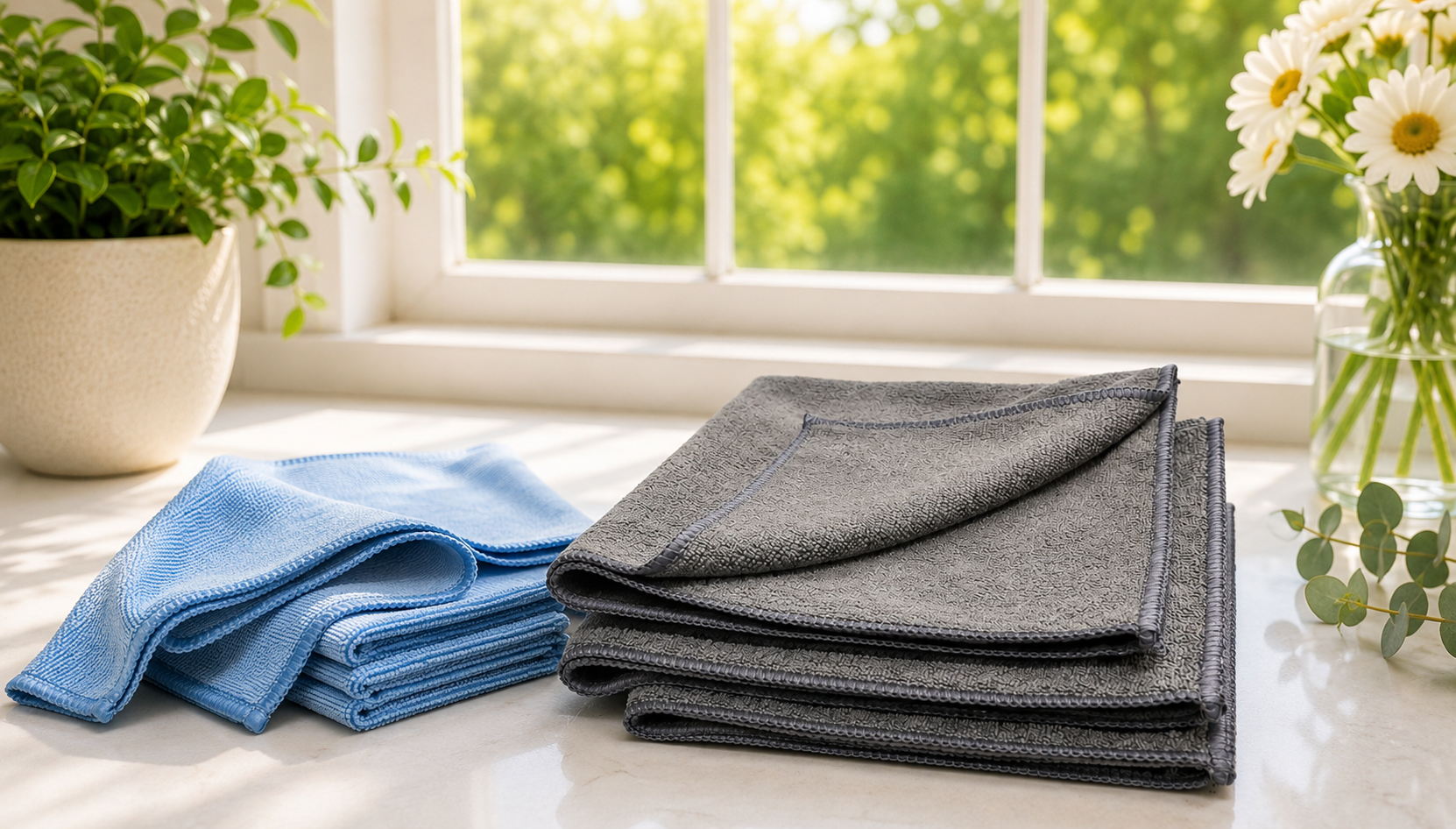
How to Wash and Care for Microfiber Towels
A few simple habits can keep your microfiber towels cleaning better for longer.
Microfiber towels are one of those cleaning tools that are easy to take for granted.
Use one to wipe down a countertop, clean a mirror, pick up a spill, or tackle a few muddy paw prints. When you're finished, toss it in the laundry and grab another one.
But microfiber is a little different from the cotton towels and other fabrics around your home. The same tiny fibers that make it so effective at picking up dirt, dust, oils, and moisture also mean it benefits from a little different care.
The good news? There isn't much to it.
Knowing what to wash microfiber with—and, perhaps more importantly, what not to wash it with—can help your towels stay absorbent, soft, and effective much longer.
What Makes Microfiber Different?
Microfiber works because of its extremely fine synthetic fibers. Quality cleaning microfiber is made with fibers much smaller than a human hair, creating an enormous amount of surface area in a relatively small towel.
Those fibers help grab and hold onto dust, dirt, moisture, oils, and other debris rather than simply pushing everything across the surface.
That's why a good microfiber towel can make such a noticeable difference when you're cleaning glass, wiping countertops, or picking up everyday messes.
It's also why how you care for it matters.
Coat those fibers with fabric softener, fill them with lint from other fabrics, or repeatedly expose them to excessive heat, and the towel may gradually stop performing the way it did when it was new.
Fortunately, keeping that from happening is pretty simple.
Wash Microfiber Separately When You Can
If you've ever washed microfiber with a fluffy cotton bath towel, you've probably seen what can happen.
Microfiber loves lint.
Those tiny fibers that are so good at picking things up while you're cleaning don't suddenly stop doing their job when they enter the washing machine. They'll happily collect fibers shed by cotton towels, blankets, clothing, and other fabrics.
For the best results, wash microfiber towels together in their own load.
If you don't have enough dirty microfiber to justify running an entire load, at least avoid washing them with particularly lint-heavy items such as bath towels and blankets.
You Don't Need a Lot of Detergent
More detergent doesn't necessarily mean cleaner microfiber.
In fact, using too much can leave detergent residue behind in the fibers—the exact opposite of what we're trying to accomplish.
Use a small amount of a mild liquid laundry detergent and allow the washing machine to do the work.
There's also no need to reach for a complicated collection of laundry additives.
Microfiber care is one of those situations where simple is usually better.
Skip the Fabric Softener
If there's one microfiber-care rule worth remembering, this is probably it:
Don't use fabric softener.
Traditional liquid fabric softeners work in part by depositing lubricating compounds onto fabric fibers. That can make clothing and towels feel softer, but coating microfiber interferes with the characteristics that make it such an effective cleaning material.
The towel may still look perfectly fine, but its absorbency and cleaning performance can suffer.
The same principle applies to dryer sheets, which can leave conditioning agents behind on fabrics.
Your microfiber doesn't need either one.
Skip the Bleach, Too
Chlorine bleach can be unnecessarily harsh on microfiber and may shorten the useful life of the material.
For normal household cleaning towels, a proper wash with detergent should be enough.
If a towel has reached the point where ordinary laundering isn't getting it clean anymore, it may simply be nearing the end of its useful life as a primary cleaning towel.
And that doesn't necessarily mean it has to go straight into the trash.
More on that in a minute.
Warm Water Is Plenty
You don't need extremely hot water to get microfiber clean.
A normal wash cycle with cool or warm water is generally all that's necessary for everyday household microfiber.
Excessive heat isn't particularly friendly to synthetic fibers, so hotter isn't automatically better.
That's a useful rule to remember throughout the entire cleaning process—including drying.
Air Dry or Use Low Heat
Air drying is one of the gentlest ways to dry microfiber.
Hang the towels somewhere with good airflow and allow them to dry completely before storing them.
Of course, we live in the real world.
Sometimes you've got a load of cleaning towels and you'd rather put them in the dryer than have microfiber hanging all over the house.
That's fine, too.
Use a low-heat setting, skip the dryer sheet, and avoid unnecessarily high temperatures.
Microfiber doesn't need to be babied. It just doesn't need to be cooked.
Keep Your Glass Towels Separate
This is one of those small habits that can make a surprisingly big difference.
If you have microfiber specifically designed for glass, consider keeping those towels separate from the ones you use for heavier household cleaning.
The towel you used to clean grease from around the stove probably shouldn't be the next towel you grab to polish a bathroom mirror.
Even after laundering, separating towels by purpose helps reduce the chance of transferring residues onto surfaces where streaks are especially noticeable.
It's one reason we like having dedicated microfiber for glass and separate microfiber for general cleaning around the house.
Don't Put Microfiber Away Damp
This applies to plenty of things around the house, but it's especially easy to overlook with cleaning towels.
Make sure microfiber is completely dry before folding and storing it.
A clean, dry cabinet, drawer, basket, or container works perfectly well. You don't need a special storage system.
The important part is keeping clean microfiber clean and dry until you're ready to use it again.
When Is It Time to Replace a Microfiber Towel?
Microfiber doesn't have an expiration date.
How long a towel lasts depends on its quality, how often it's used, what you're cleaning with it, and how it's cared for.
Instead of counting washes, pay attention to how the towel performs.
If it no longer absorbs the way it once did, continually leaves streaks, feels permanently stiff, remains heavily stained after washing, or simply doesn't seem to clean very well anymore, it's probably time to retire it from its original job.
But around our house, "retired" doesn't necessarily mean "thrown away."
An older glass towel might become a general cleaning towel. A well-used cleaning towel might eventually become the one we grab for a particularly dirty job.
There's no reason to use a brand-new microfiber towel for every mess life—and pets—can come up with.
The Simple Microfiber Routine We Follow
Caring for microfiber doesn't need to become another household chore with twelve different rules.
For everyday cleaning, we keep it simple:
- Wash microfiber separately when possible.
- Use a small amount of mild liquid detergent.
- Skip fabric softener, bleach, and dryer sheets.
- Wash in cool or warm water.
- Air dry or tumble dry on low heat.
- Make sure towels are completely dry before storing them.
- Keep glass towels separate from general-purpose cleaning towels.
That's really it.
Good microfiber is designed to be used, washed, and used again.
Take reasonable care of it, and it should continue doing exactly what a good cleaning tool is supposed to do: make the job easier.
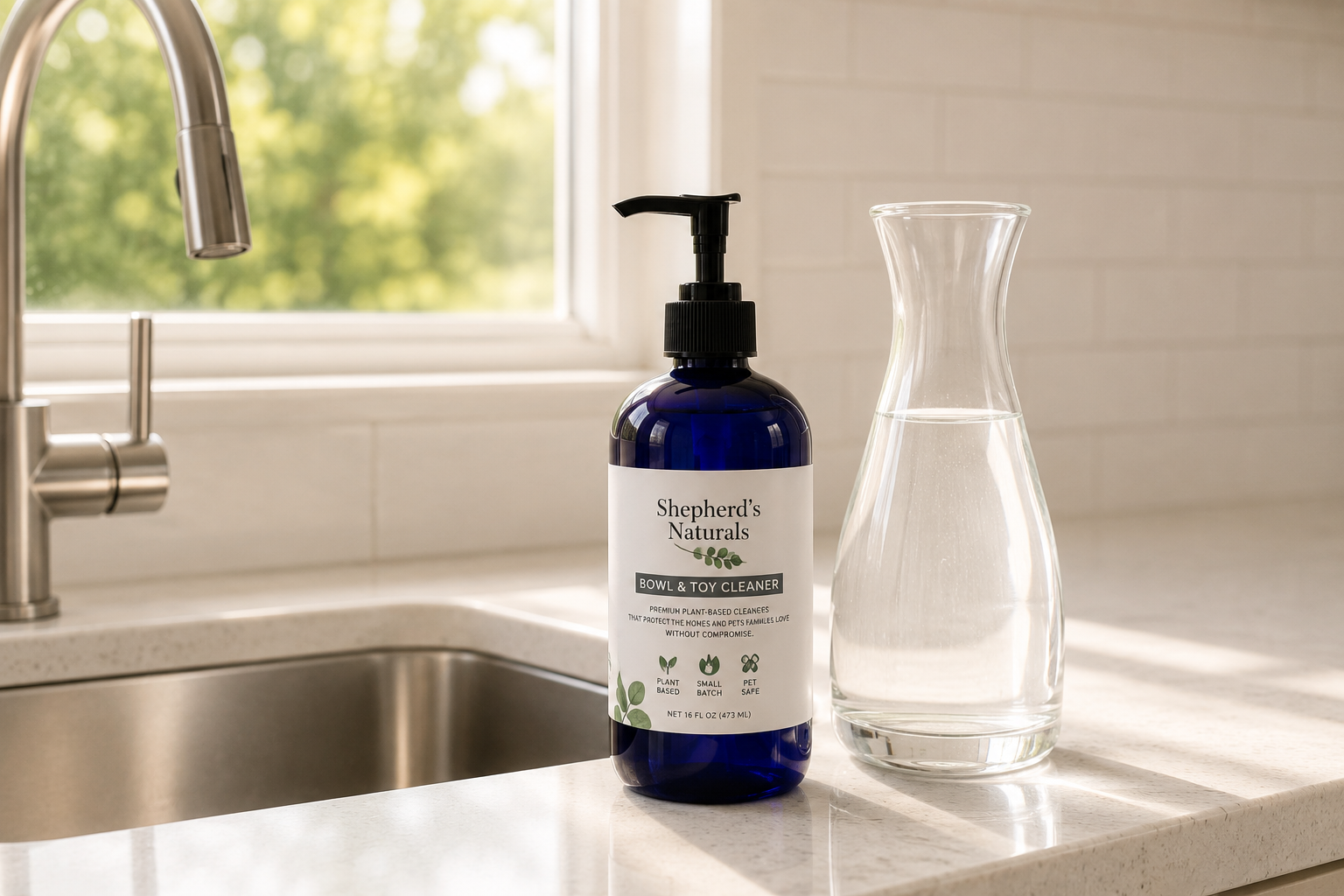
A Shepherd's Naturals Note
We spend a lot of time thinking about what's in the bottle, but the tool you use with it matters, too.
That's why we chose different microfiber towels for general household cleaning and glass rather than treating microfiber as one-size-fits-all. Different surfaces and different jobs benefit from different tools.
And just like the cleaners themselves, we'd rather explain why something works than simply tell you that it does.
Because when you understand the tools you're using in your home, taking care of them becomes pretty simple.
Thoughtfully,
Shepherd's Naturals
Every Ingredient. Clearly Listed.
Safe for pets. Tough on messes.
Questions? Comments? Email us anytime at hey@shepherdsnaturals.com. We'd love to hear from you.

Written by Scott Millett

Leave a comment
This site is protected by hCaptcha and the hCaptcha Privacy Policy and Terms of Service apply.